IT strategy
The biggest interface problems in industry: why missing integration costs companies millions
Moltomedia

*This graphic was partly created with the help of generative artificial intelligence and then edited manually
👉 Let’s start right at the beginning
A manufacturing company grinds to a halt for an hour. No cyberattack, no fire, no natural disaster. Simply because two systems refused to talk to each other. According to Siemens’ “True Cost of Downtime 2024”, unplanned downtime now costs the world’s 500 largest industrial companies around 1.4 trillion US dollars a year – that is 11 % of their total revenue. In 2019, it was still 8 %. In automotive manufacturing, a stalled production line can cost up to 2.3 million US dollars per hour. ABB’s “Value of Reliability” study puts the cross-industry median cost of downtime in the German economy at around €147,000 per hour, and more than two thirds of companies are affected at least once a month.
This is no longer an IT problem. It is a business problem, with figures that should make every CFO and CEO sit up and take notice.
🖥️ Two worlds, one shared problem
In industry, two historically separate worlds are currently merging: classic IT, which manages data and applications, and OT (operational technology), which controls physical equipment, from sensors and PLCs to SCADA systems. For decades, both worlds had their own rules, their own priorities and their own language. IT teams think in update cycles and agility, operational technology teams in uninterrupted operation and maximum reliability. A recent IoT Analytics study shows that this very cultural difference is one of the biggest obstacles to IT/OT convergence, on top of legacy systems that were never designed to connect to modern IT systems and simply lack suitable interfaces.
The result: two worlds that are supposed to grow together but are barely prepared for it technically, organisationally or culturally.
On the classic IT side, things hardly look better. A Bitkom study shows that 53 % of German companies are struggling to cope with digitalisation. A central, recurring factor appears to be the lack of integration between existing systems such as ERP, PIM, CRM and shop solutions. The decisive point could be that this turns individual digitalisation measures into isolated island solutions, meaning that no end-to-end processes emerge. The consequences are duplicate data maintenance, media breaks, manual rework and errors that run through the entire process chain.
⚠️ When interfaces are missing, it gets expensive – and not just technically
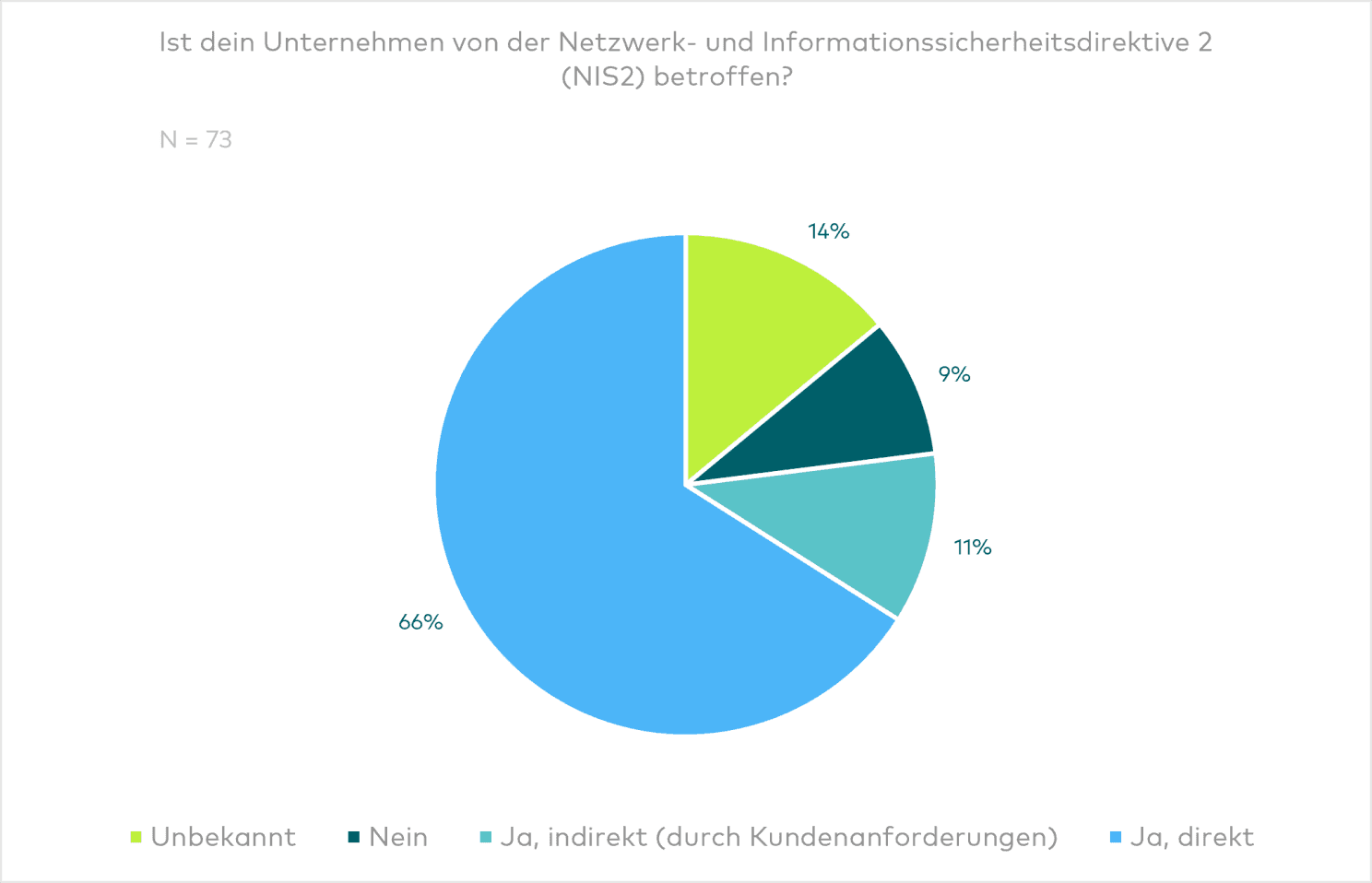
Background check: The NIS2 Directive governs the cybersecurity of organisations and critical infrastructure, while the Cyber Resilience Act (CRA) sets binding security standards for digital products (hardware and software). Both laws interlock to protect the European supply chain against cyberattacks without gaps.
🎯 Losing control of digitalisation projects: Bitkom’s study “Digitalisierung der Wirtschaft 2025” shows that 53 % of German companies have difficulty steering their digitalisation projects – an increase of 14 percentage points since 2023. The ability to manage digitalisation is decreasing, not increasing, while the technical systems are becoming more complex at the same time.
🎯 New silos through AI investments: Current analyses by HiSolutions on the IT trends for 2026 warn that uncontrolled AI initiatives create additional island solutions that offer no end-to-end understanding of processes and produce new interface chaos instead of solving existing problems. In the end, the IT organisation bears the cost of this development.
💡 Why this isn’t news – and yet keeps being ignored
We have already covered this topic from various angles in our articles: confusing product data, duplicate information and systems that don’t communicate with each other slow down not only IT but sales, marketing, e-commerce and customer service alike. What has intensified since then is the scale: where software systems used to be the main concern, physical production plants are now merging with the IT landscape too. The attack surface for errors, outages and security gaps grows accordingly.
The core of the problem is almost always the same: companies buy systems before they have really understood their processes and data flows. A new ERP, an additional PIM, a new automation solution in production – each one makes sense on its own, of course, but without a well-thought-out interface strategy, all you end up with is yet another silo and more data chaos.
🎯 What you can do now
The good news: interface problems are not a law of nature but the result of missing strategic planning – and they are entirely solvable.
Take stock instead of relying on gut feeling: Which systems exist, which data flows where, and where do media breaks occur? Without this picture, every integration decision remains piecemeal.
Document and standardise interfaces: A well-documented, consistently designed interface noticeably reduces susceptibility to errors and even shortens the onboarding of new team members, among other things.
Bring IT and OT responsibility together: According to the study by OTH Regensburg and the 4C Group, governance structures that include both worlds instead of managing them separately are the decisive lever for greater security and real cost savings.
Prioritise by business value: Not every system has to be integrated immediately. Start with the processes that offer the greatest economic leverage (often order processing, product data or customer service).
Make monitoring a fixed part of the setup: Integration is not a one-off project. Those who detect disruptions early, before they lead to a production standstill, ultimately save the largest sums.
💙 This is exactly the interface we focus on at Moltomedia
We don’t view digitalisation in isolation as a software or hardware project, but as the interplay of strategy, system architecture and the people who work with the systems every day. Whether it’s ERP, PIM, CMS, custom interface solutions or any other software systems that communicate with each other via interfaces, we first analyse which data flows your company really needs before we talk about specific technologies. With us, you get everything under one roof: with Molto, you have one point of contact for everything IT-related – and therefore no friction losses caused by different service providers talking past each other.
Because in the end, the most expensive interface is always the one nobody thought about beforehand.
Where are things getting stuck in your company … is it still the classic IT systems that don’t work together, or is connecting IT and production already becoming a challenge for you? We look forward to hearing about your experiences.
🔗 Sources: Siemens, “True Cost of Downtime 2024” report | ABB, “Value of Reliability” study (cited via Acronis) | IoT Analytics, study on IT/OT convergence (cited via Computerwoche) | Bitkom, “Digitalisierung der Wirtschaft 2025”, study report | Dragos 2026 OT Cybersecurity Report | European cybersecurity regulation | VDMA study 2025 | OTH Regensburg & 4C Group, “IT/OT-Konvergenz: Status-Quo und Umsetzungsempfehlungen” | HiSolutions, “IT-Trends 2026”
Get the clarity you need to move your business forward now.
Start today with your free IT assessment and get a clear roadmap for your digital future in just a few days.
© 2026 Moltomedia. All rights reserved.