Supporting SMEs since 1995 · Vendor-independent, with in-house software development and hands-on operational experience
Technology consulting:
Which investment will really take you further?
Buying a new system, expanding an existing solution, or retiring a costly legacy system? We evaluate which technology aligns with your business goals, its total cost of ownership, and how seamlessly it integrates into your IT landscape. You will receive a clear recommendation alongside a roadmap for the next steps.
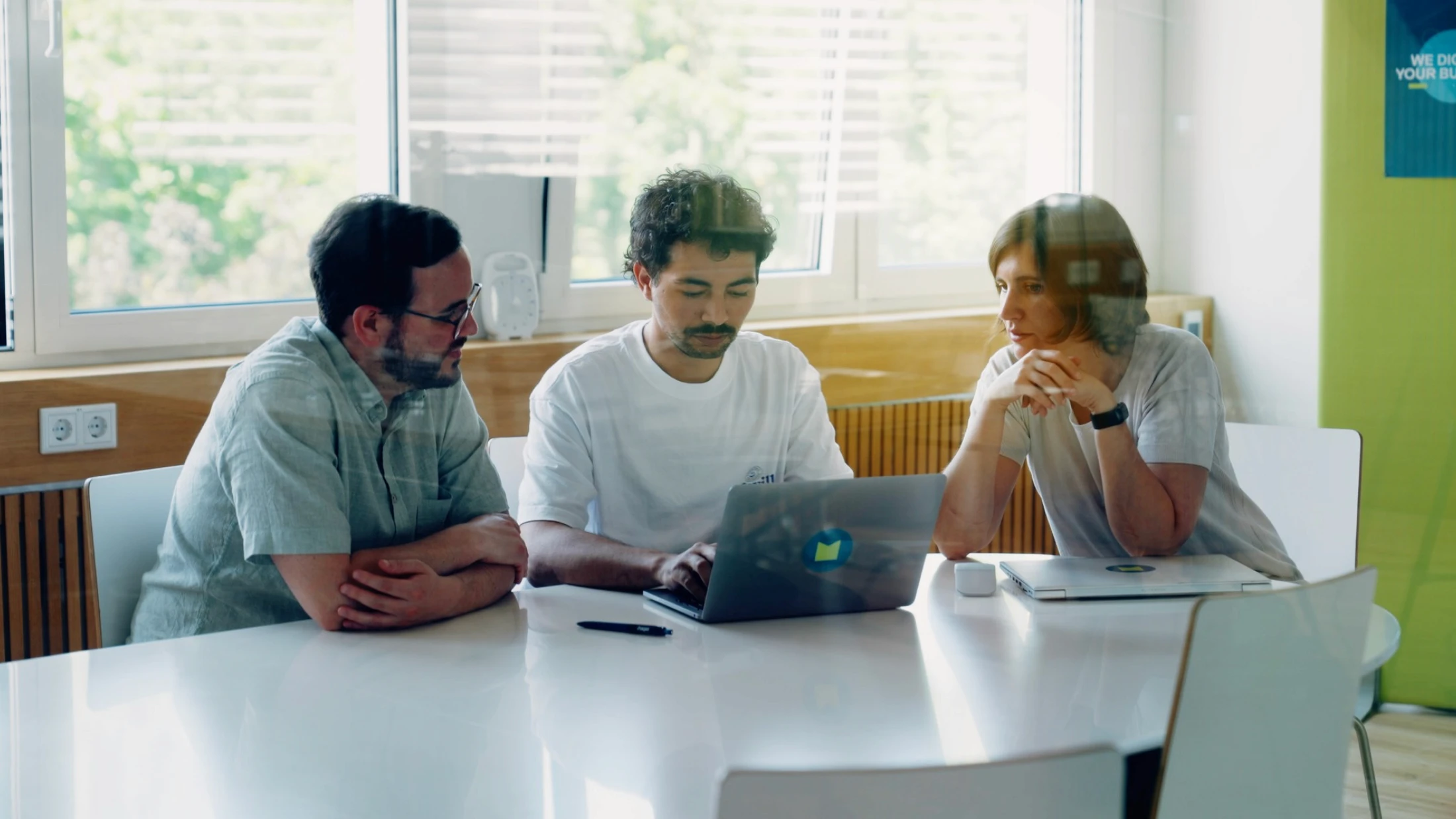
A compelling offer does not necessarily make a good investment. That is why our technology consulting begins with the objective and the existing assets.
The presentation promises less effort. The licence fits the budget. And yet the question remains: what will actually improve in your business as a result?
Often, there is no benchmark for comparison. A department wants a new tool, even though an existing system offers the same function. A contract renewal goes through, even though hardly anyone uses the paid licences. Or a new ERP is supposed to resolve a bottleneck that actually lies between two systems.
Such decisions cost more than just the purchase price. They tie up staff, create new dependencies, and often shape IT for years to come.
Two questions decide on the investment
What is the new technology supposed to improve?
We translate your goal into verifiable requirements. Does order processing need to handle higher volumes? Do employees need to find information faster? Should manual handovers between two systems be eliminated? Only when the outcome is clear can solutions be compared effectively. In doing so, we also check whether the bottleneck can be resolved using existing features, an interface, or a process change.
What from the existing stock is still needed?
A new solution delivers little value if the old one continues to run alongside it. That is why we examine the affected systems, contracts, and dependencies: what contributes to the goal, what is redundant, what is barely used, and what needs to be phased out in an orderly manner? The scope of the review remains tailored to your decision. For a single technology question, we do not automatically pull apart the entire IT estate.
What we compare
Operational benefit: Which bottleneck is being resolved, and how will the improvement be recognised?
Total costs: acquisition, implementation, interfaces, training, operation and subsequent migration
Integration: data flows, existing systems and effort required for integration and migration
Usage: Workflows, acceptance, and onboarding of affected employees
Operational capability: Available skills, responsibilities, maintenance and support
Dependencies: vendors, contract terms, data export and exit options
To achieve this, we collaborate with your IT team, the relevant departments and, if requested, your existing service provider. They know the points where a data sheet does not reflect reality.
Request a free initial consultation
Around 30 minutes. You outline the pending decision or problem. We identify what is needed for a reliable assessment.
The invoice exceeds the licence
Costs and benefits often arise in different departments. A new system impacts the IT budget, but saves time in sales, purchasing and administration. Conversely, a cheap licence can lead to additional manual work. That is why we compare the following over a shared assessment period:
Assumptions and data gaps remain visible. If a benefit cannot yet be reliably quantified, we define which information or tests are needed before making a decision.
Quick check: Keep, connect, replace or retire?
If the main question is whether to use off-the-shelf software or develop an in-house solution, we explore the comparison in greater depth during our make-or-buy consulting.
What you will take away from the consultation
The documents belong to you. Your team or another service provider can continue working with them.
This is how the collaboration begins
Step 1
Narrow down decision
In a free initial consultation, we will discuss the background, objectives, and any existing documents. You will then receive a proposal outlining the scope of the assessment, deliverables, timeline, and a fixed price.
Step 2
Rate options
We assess the relevant existing portfolio, talk to stakeholders, and compare potential approaches. Where multiple locations are involved, we take into account both shared requirements and justified local differences.
Step 3
Discuss recommendation
We present the evaluation and roadmap and answer any open questions. Based on this, you decide on the investment.
Step 4
Commission implementation
An implementation, customisation, or replacement is a separate project. It can be carried out by your team, an existing partner, or Moltomedia.
What lies behind our work
We understand technology decisions from the perspectives of consulting, development and operations. As a result, we also consider the questions that arise after implementation: Who will maintain the interface? What happens with the next update? Can another team take over?
We have been working for medium-sized businesses since 1995 and bring an entrepreneurial perspective to the table. A recommendation must be economically viable and feasible in day-to-day operations. This could mean a new acquisition, integrating existing systems, or the decision not to purchase anything for the time being.

Frequently asked questions
We already have a quote. Can you review it?
We have a problem, but no specific product in mind yet. Does that work too?
How does this differ from IT strategy consulting?
How much time do our employees need?
How much does the consultation cost and how long does it take?
Can you also implement it afterwards?
Which technology decision are you currently facing?
A contract renewal, a new offer, or a process that has been causing unnecessary hassle for years: tell us what's on your mind. In a free initial consultation, we'll clarify which questions need to be answered before you make your decision.